This project urged a more conscious consideration of how design choices drove user behaviour - and with it came a clearer understanding of how users' needs, desires, biases, and habits must drive the design process, rather than attempts to unduly influence users into behaving in a desired manner. Designers are responsible for maintaining a very fine balance between engaging the user without manipulating them, even if it may be unintentional. For this project specifically, the app targeted school-aged users, which made that responsibility all the more crucial.
This app is designed to be accessible to students of all ages and learning levels. It employs a simple feedback loop where users would play mini-games and complete daily in-app objectives, and for each task completed, 100mL of clean water would be donated to a Canadian community in need. A variety of mini-games helped students to learn more about the issue of clean water access, as well as indigenous culture with the goal of building both awareness and empathy.
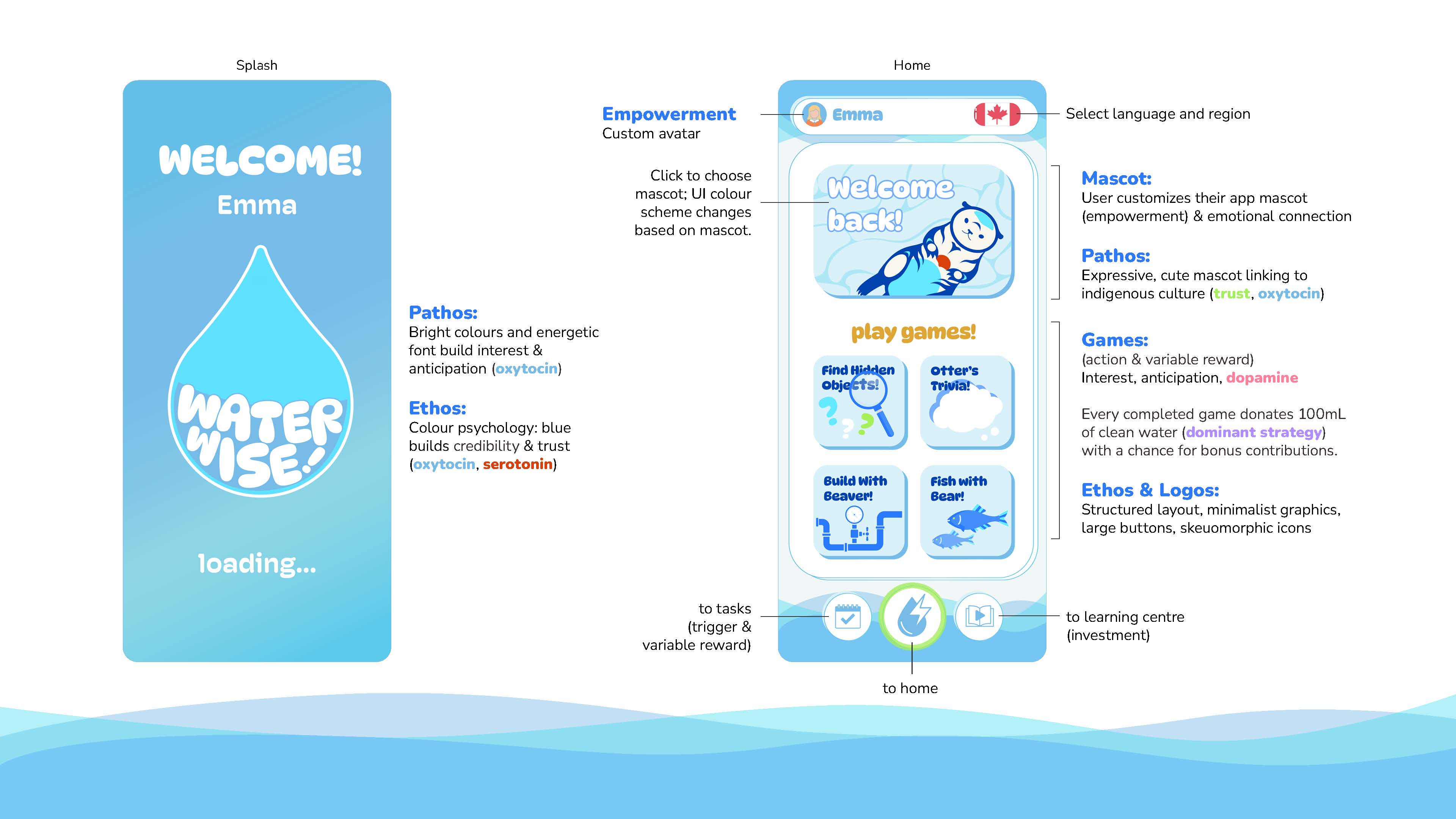
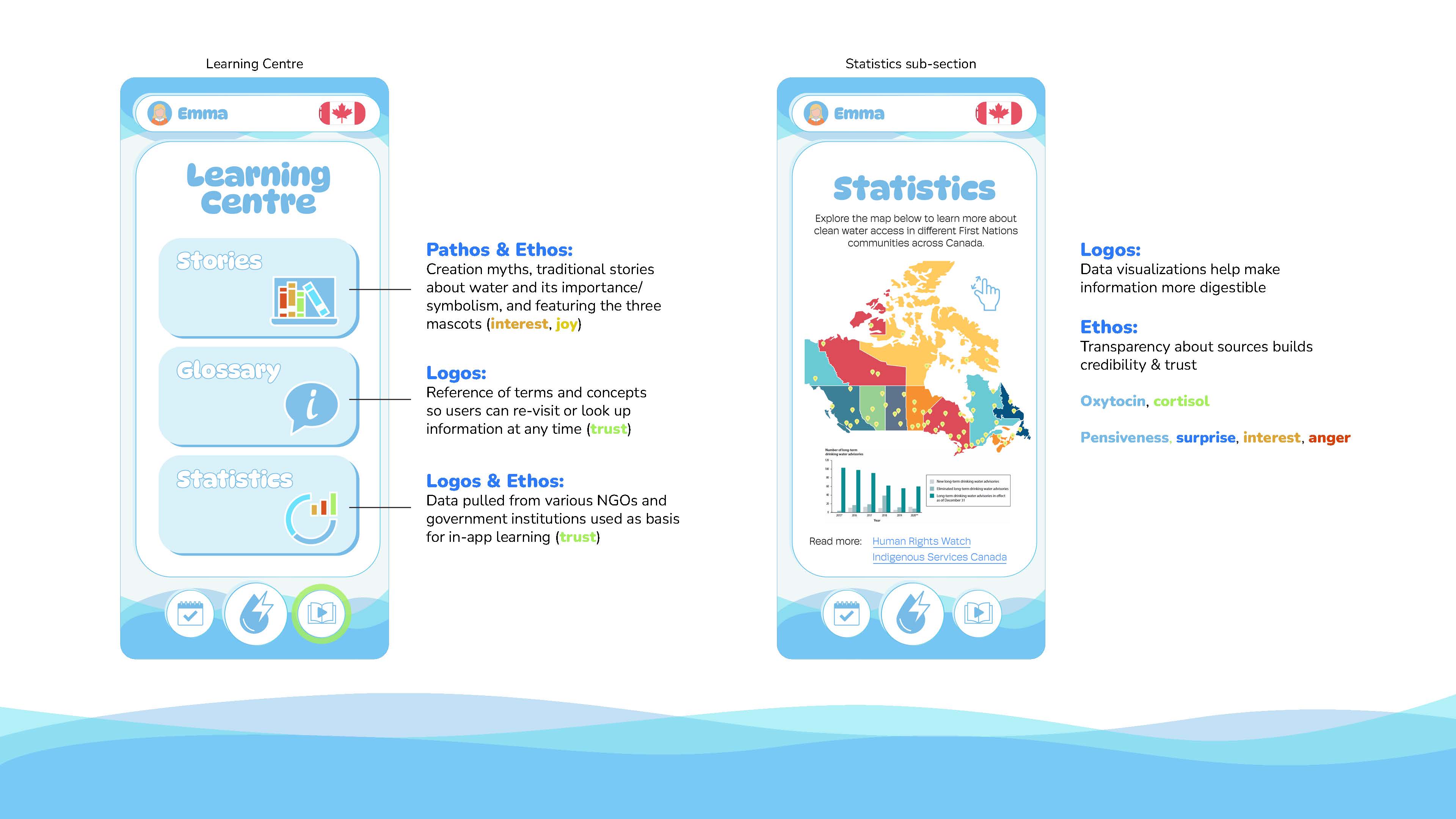
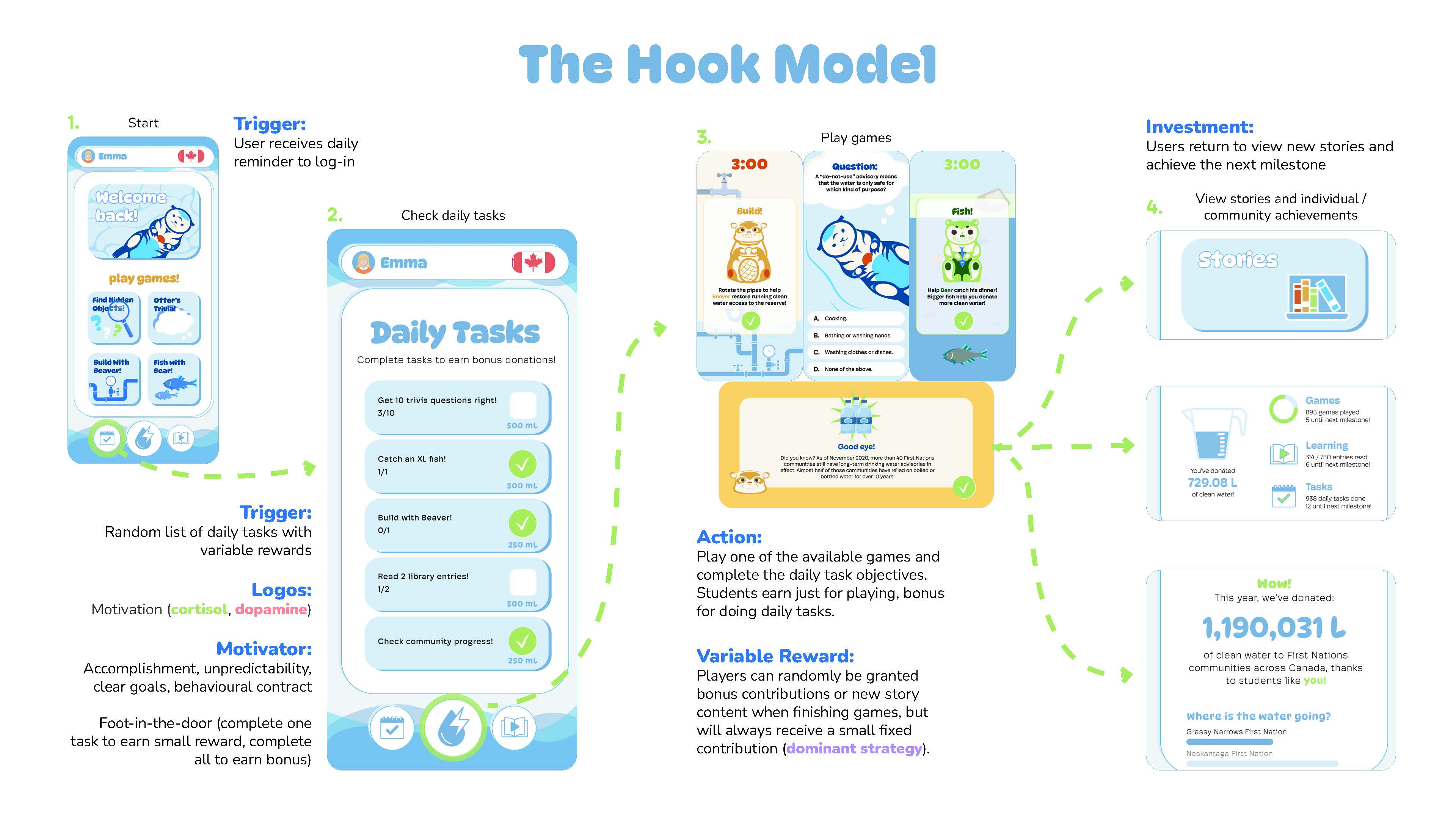
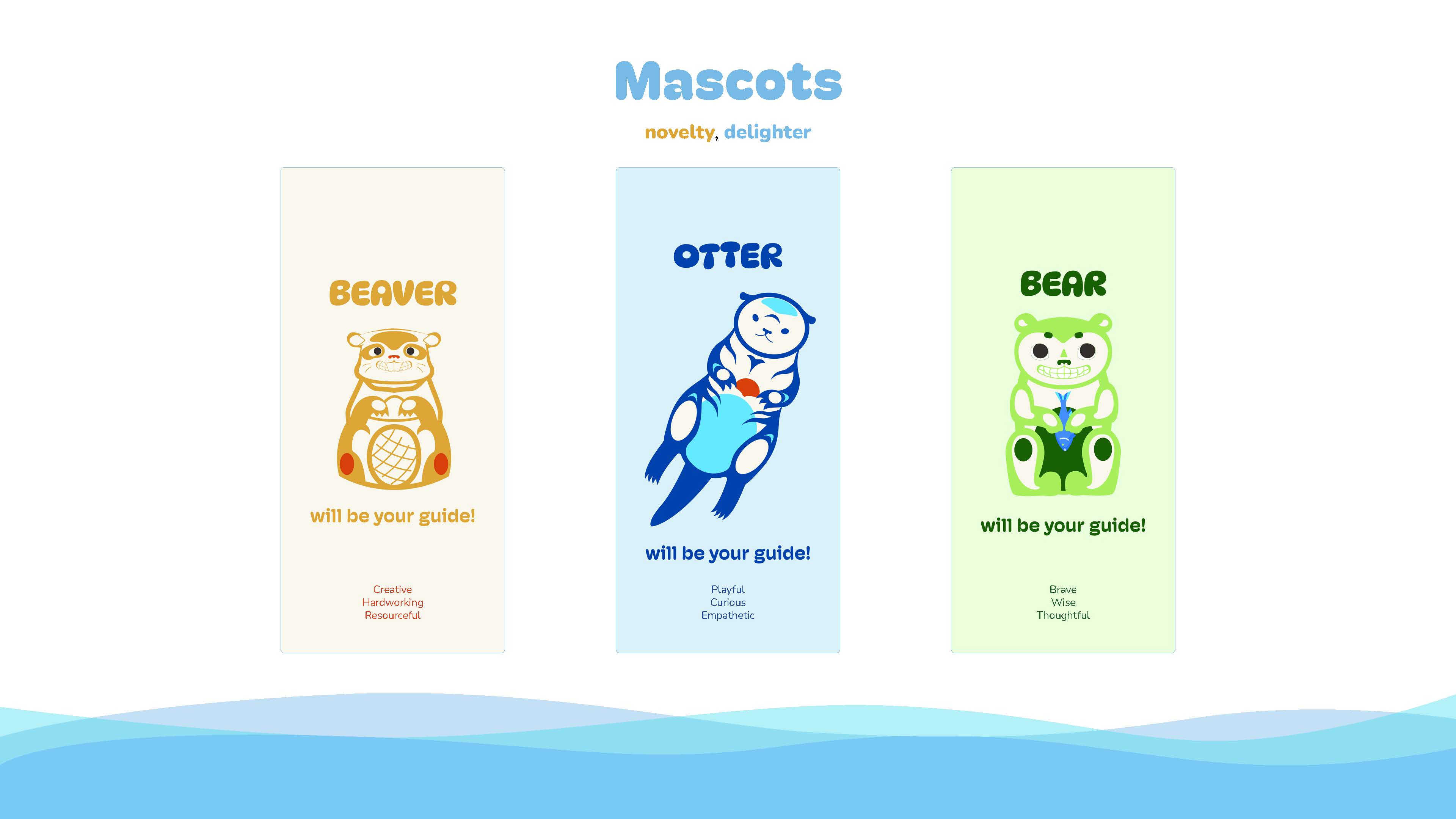
The final app concept incorporated a user loop built on the Hook model, with plenty of ways for the user to visualize and validate their real-world impact by viewing both personal and community donation progress. The fairly short list of daily objectives both incentivized users to engage, but also set a clear limit on daily playtime. The mascots that guided users through apps and mini-games provided positive reinforcement, rather than attempting to guilt users into returning. The result was ultimately an engaging and responsibly designed interactive experience.
Creative & Design Direction, UX/UI Design, User Research