By far, the largest challenge for this project was in narrowing the scope of what I hoped to achieve, such that it became a feasible achievement within a 12-week timeline. I acknowledged that this was a dense, multi-layered issue that couldn't be fixed with a single solution - moreover, the potential success of any implemented solution would be need to be measured in the medium- to long-term.
Still, I believe that this was a worthwhile exploration of an important issue, and intend to continue my work on this project in the future.
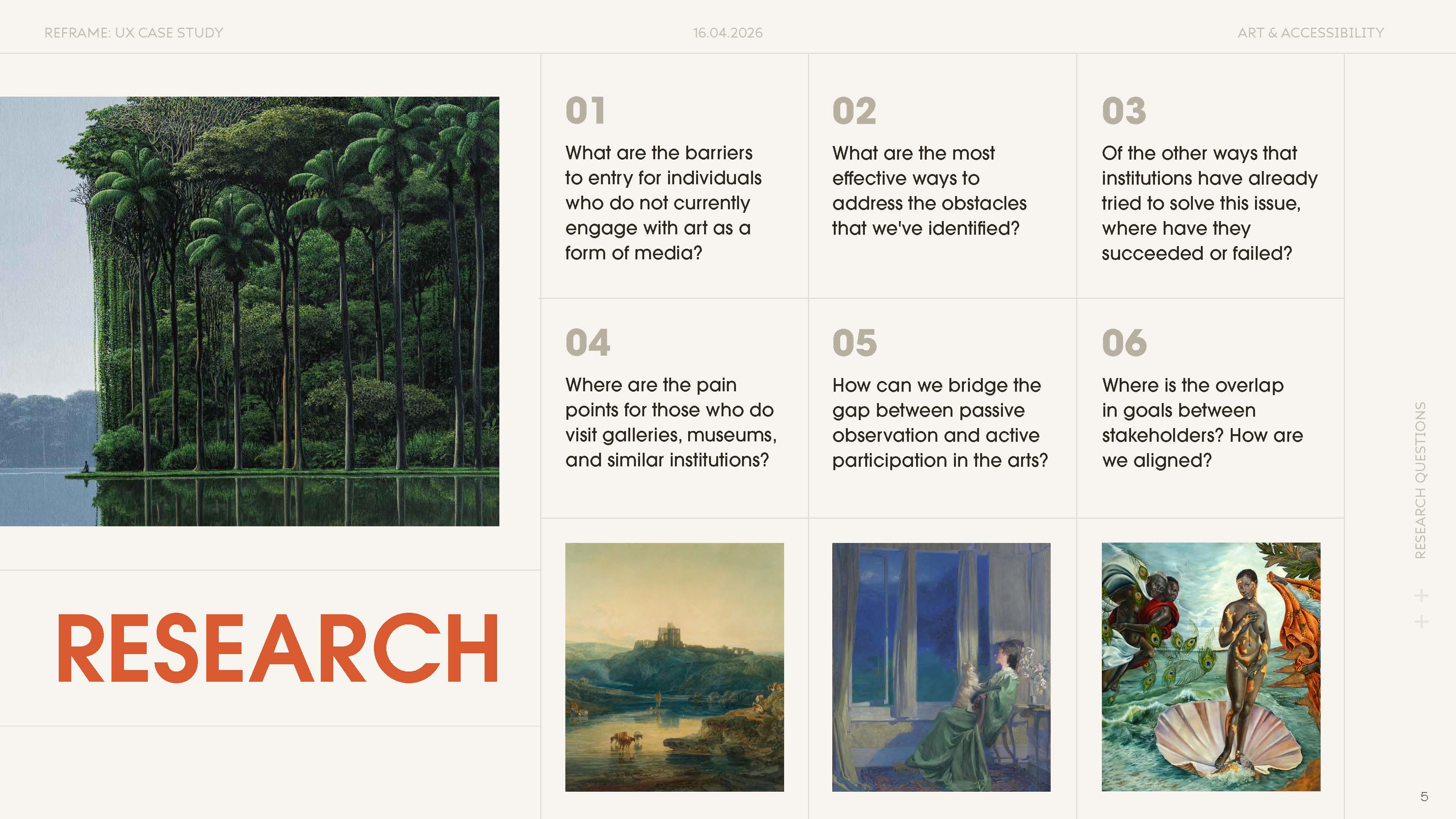
A thorough research phase consisting of a written survey, face-to-face interviews, academic review, and competitor analyses allowed me to uncover key barriers and insights to market gaps that other solutions hadn't addressed. By comparing my own findings to third-party research such as published reports and engagement data, I also identified the baseline requirements for any proposed solution - that is, the aspects that people consider to be quintessential to the art experience.
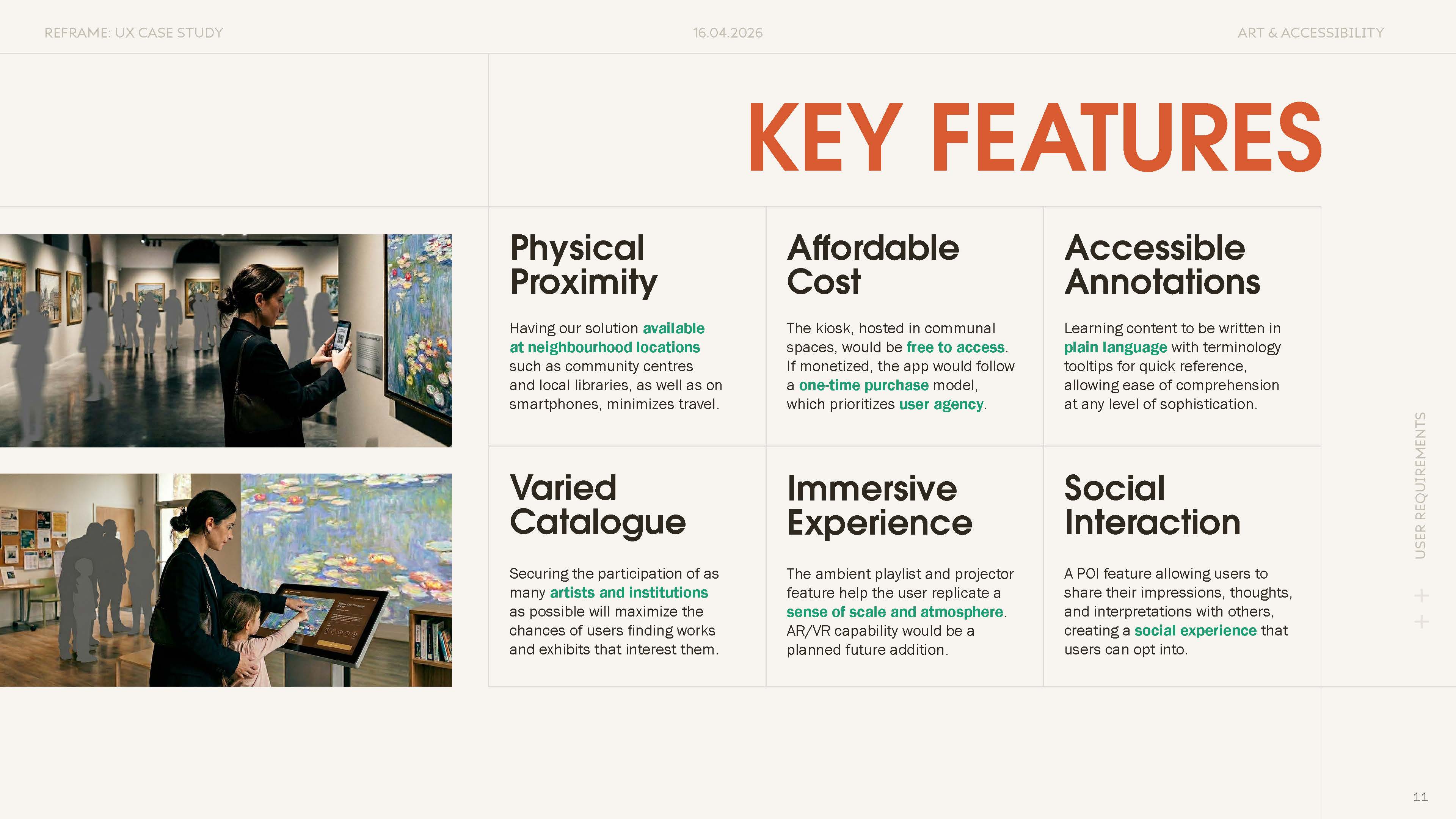
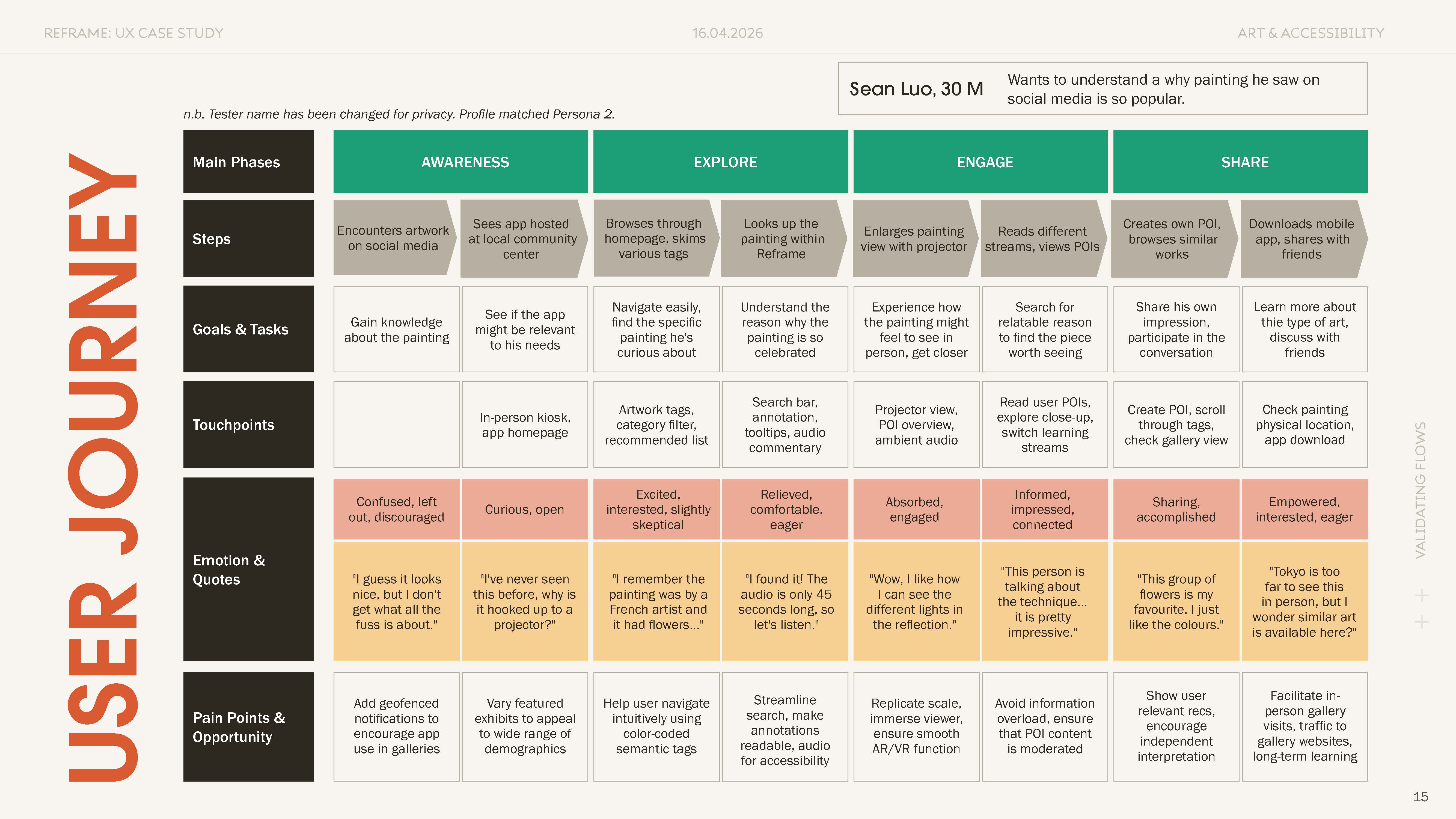
I discovered that the most common causes preventing people from visiting galleries or museums in person were threefold: (i) they didn't have the time or money, (ii) they often felt unwelcome or out of the loop due to a lack of "art knowledge", and/or (iii) they were unable to emotionally connect due to overarching anxiety about life and society.
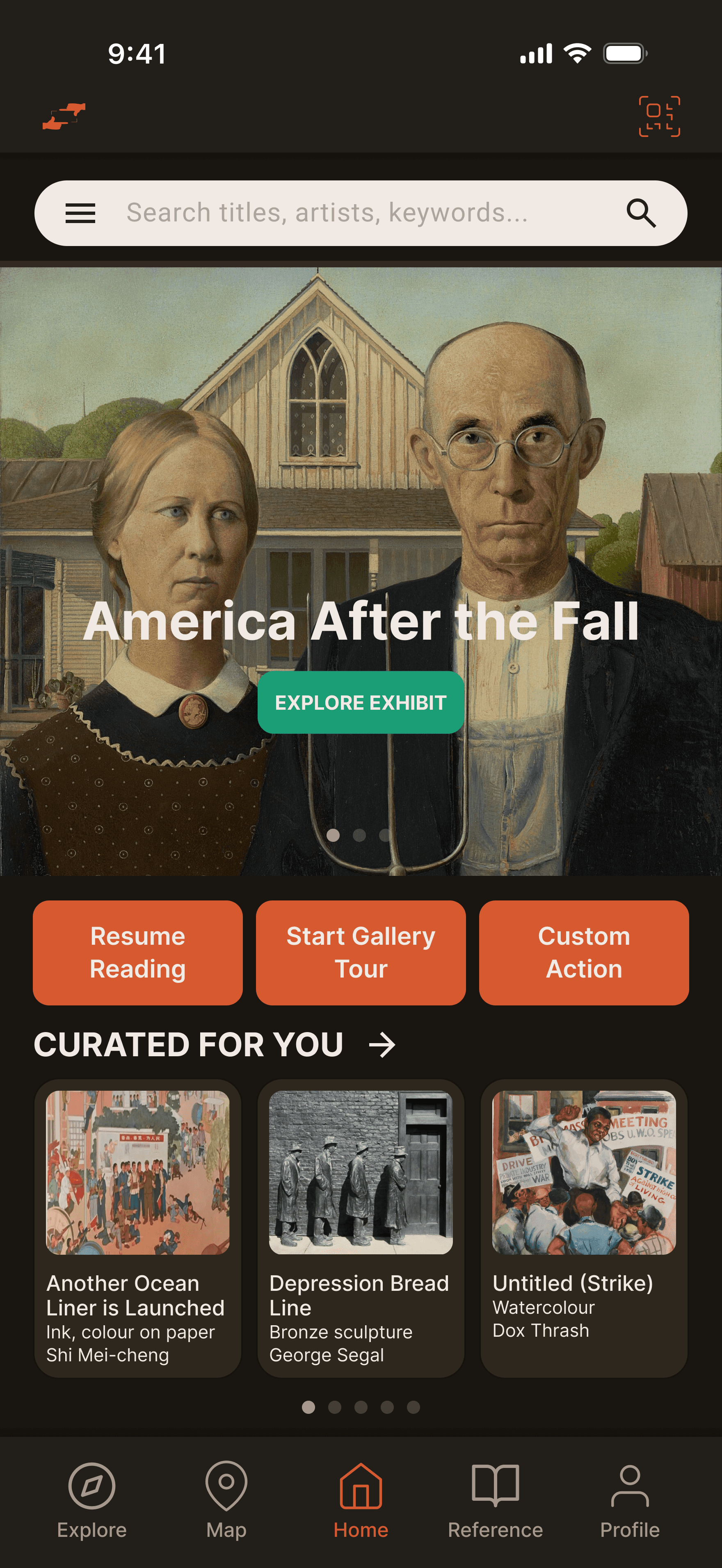
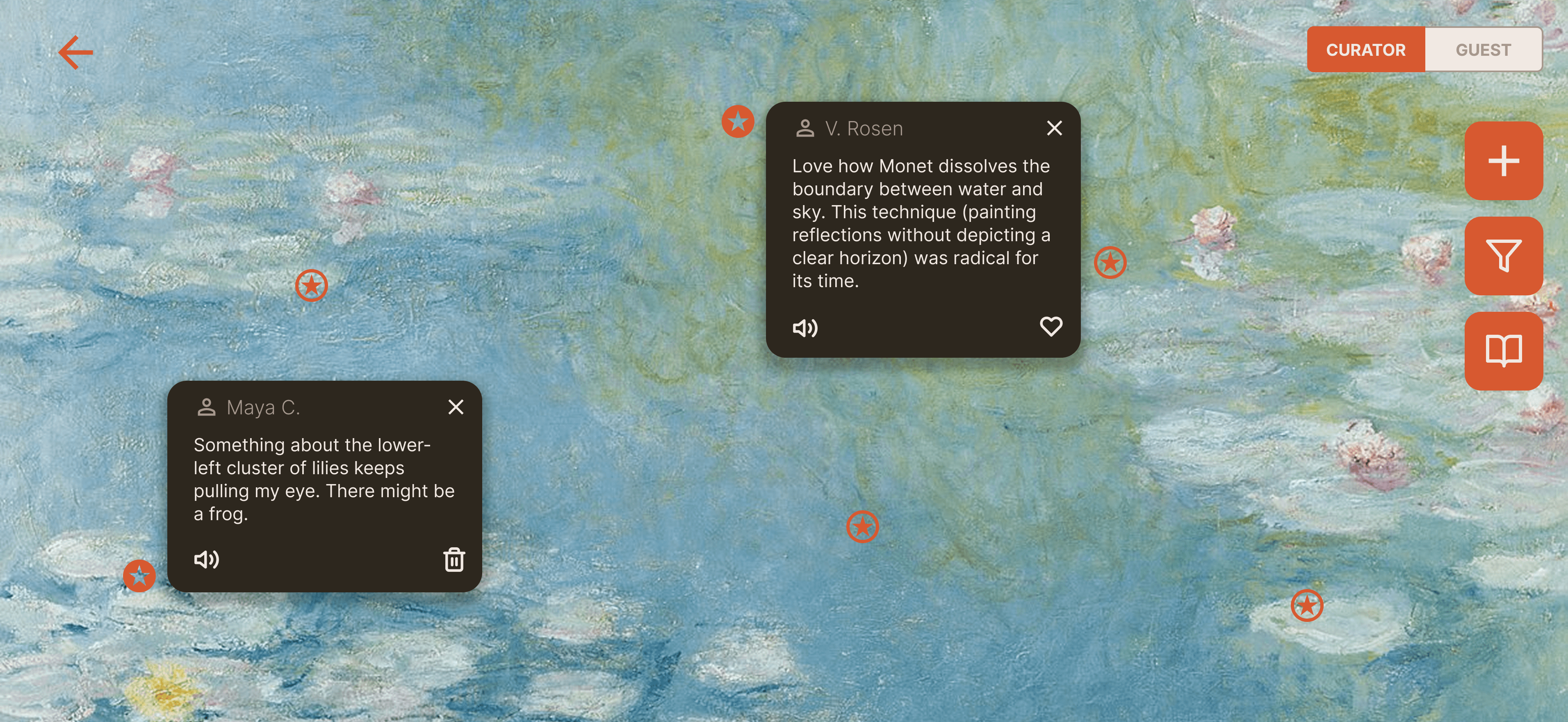
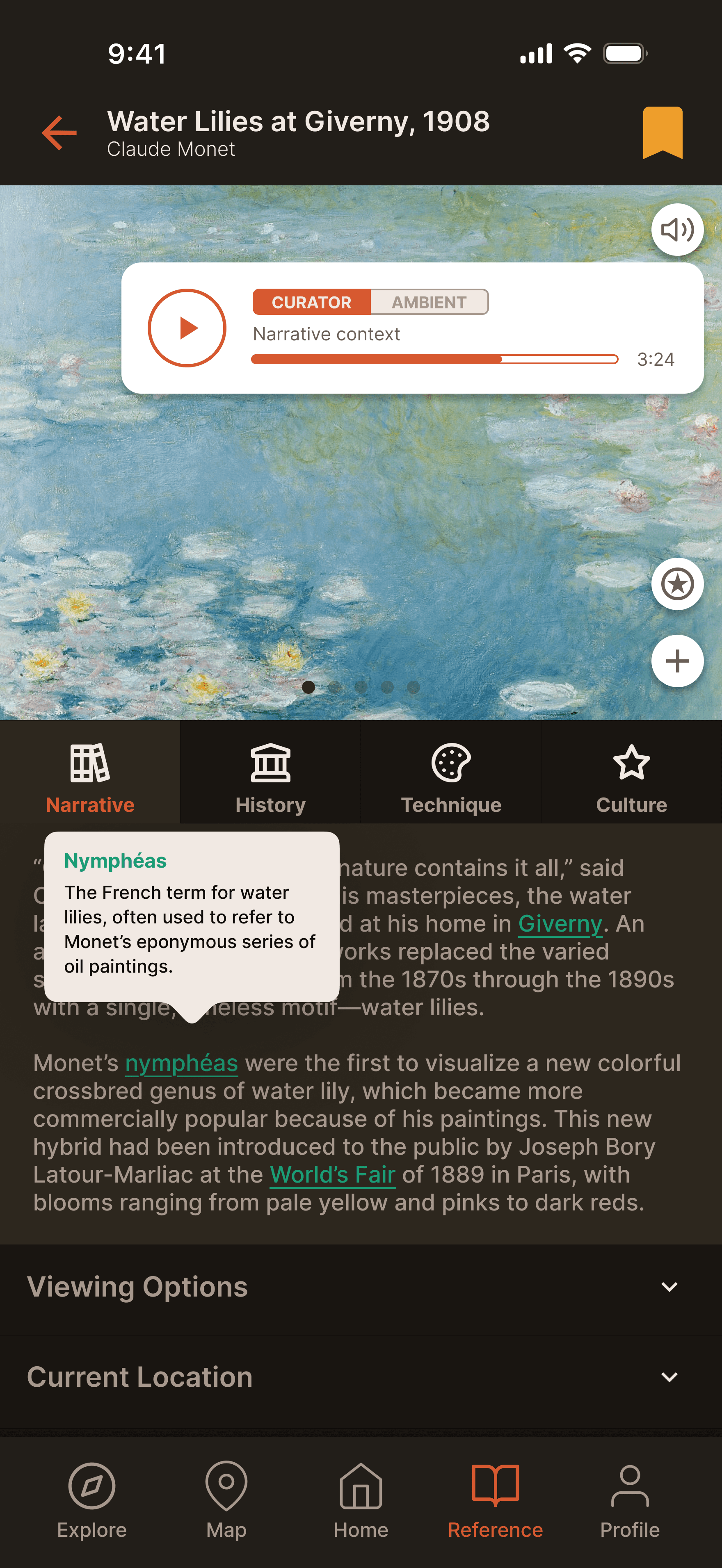
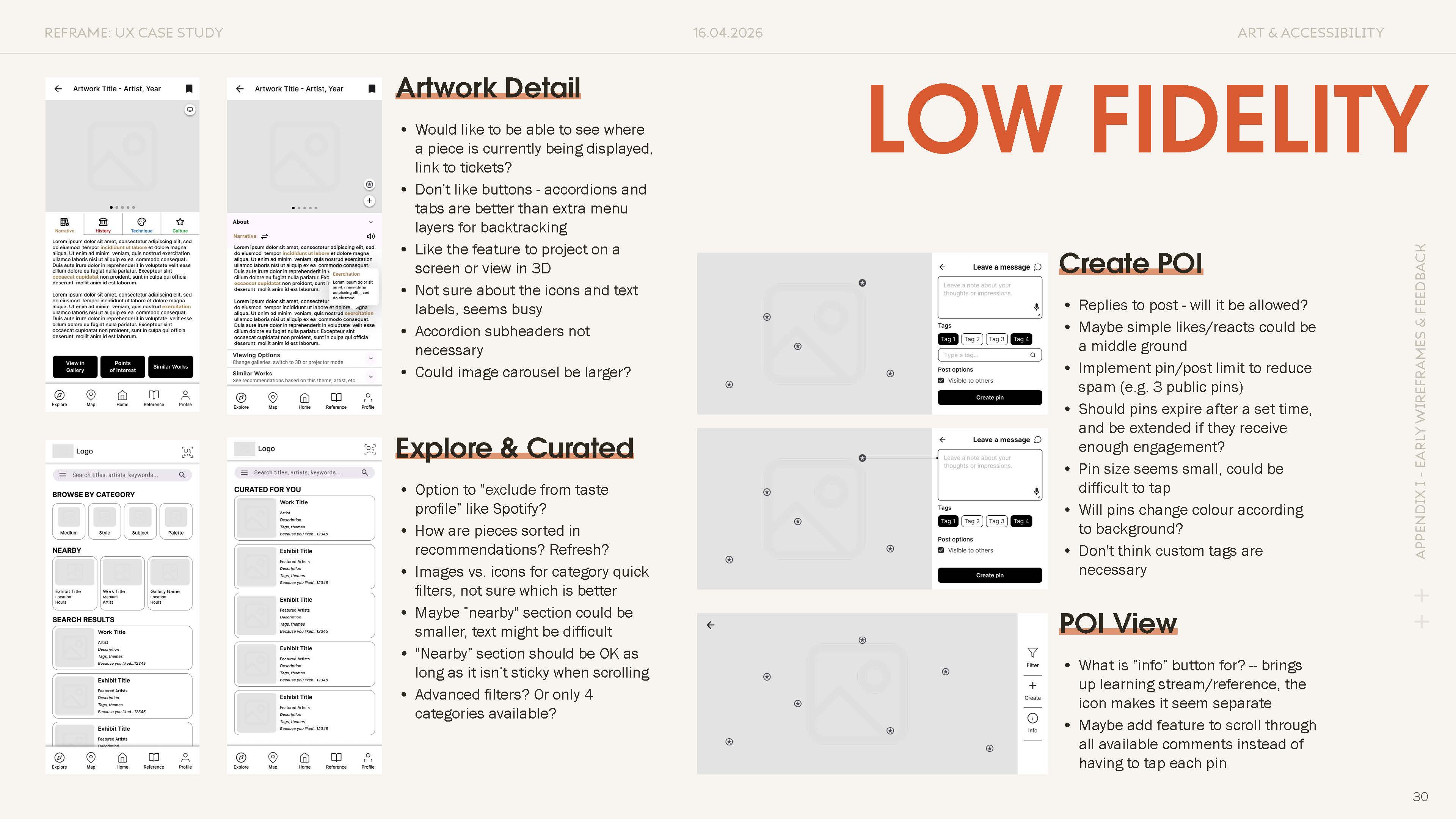
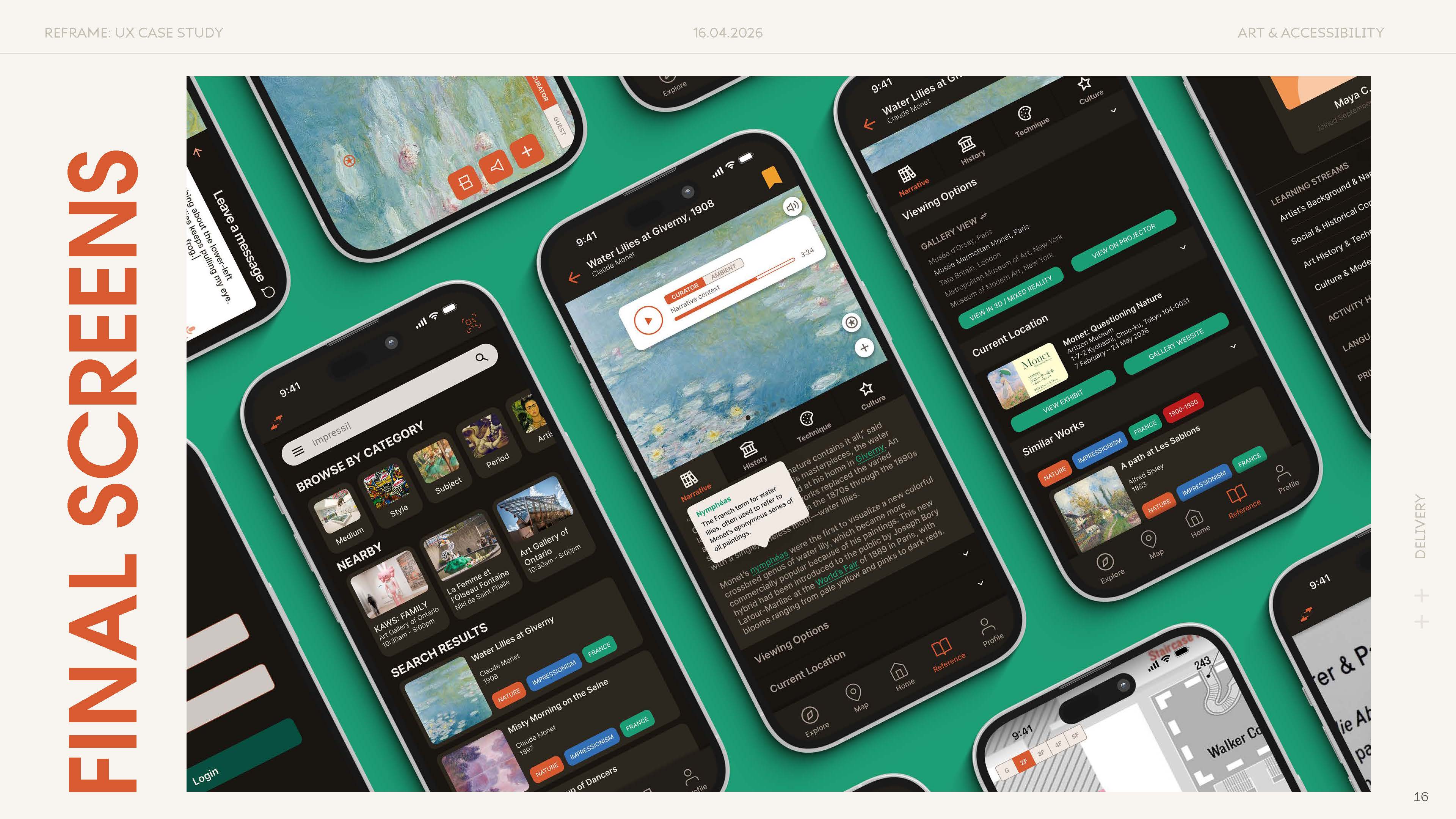
It was most realistic to tackle the first two issues. The solution I proposed was conceptualized around the ability for third spaces such as community centres, libraries, and schools to install a space that would allow artworks and exhibits to be projected in large scale via a digital app. Instead of the quasi-social experience of physically existing in the gallery space with other visitors, users could instead pin points of interest and share insights on an artwork that would then be viewable by other users. Learning content such as annotations would be broken down into streams based on the user's interest, with terminology tooltips for quick reference.
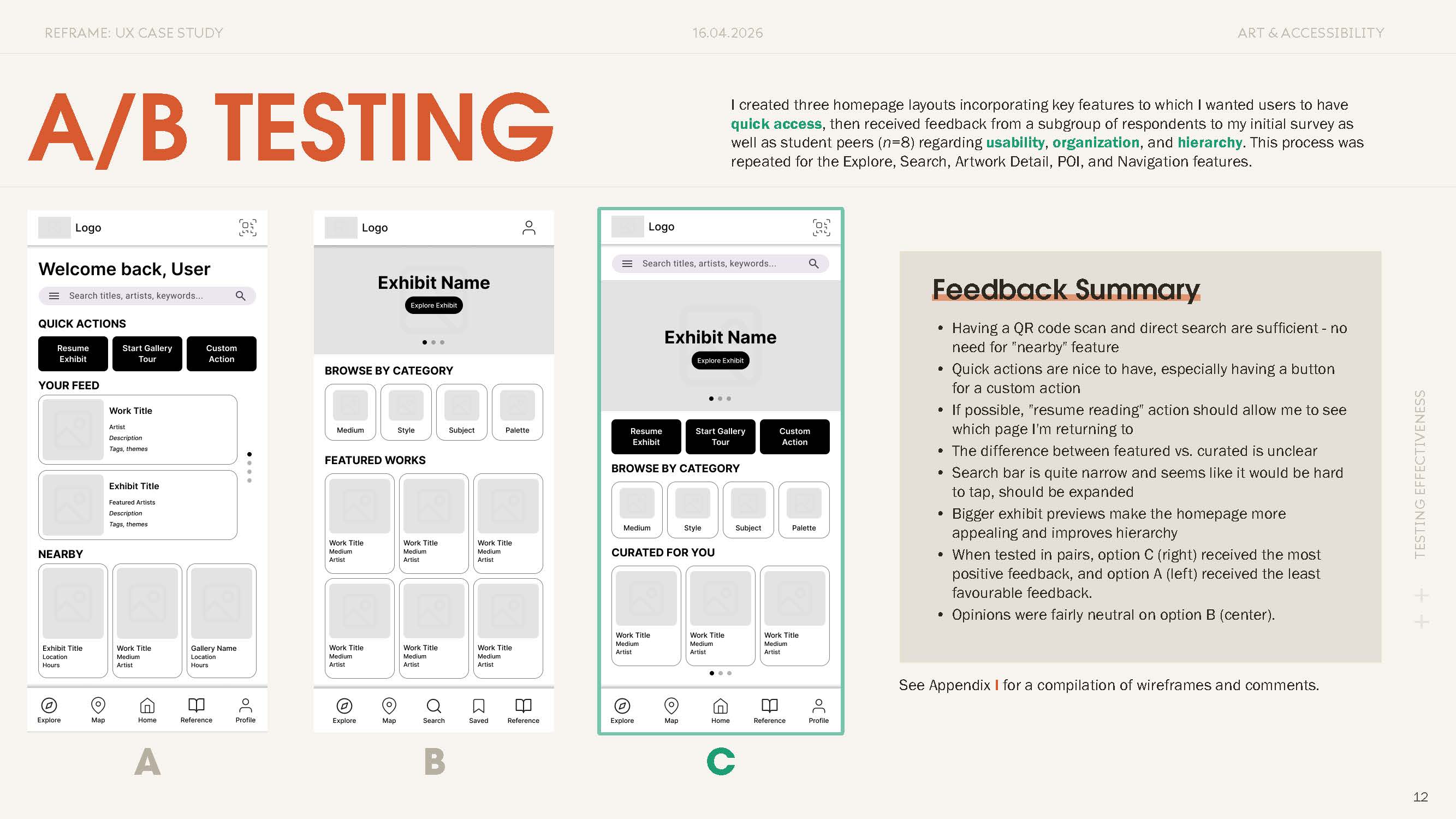
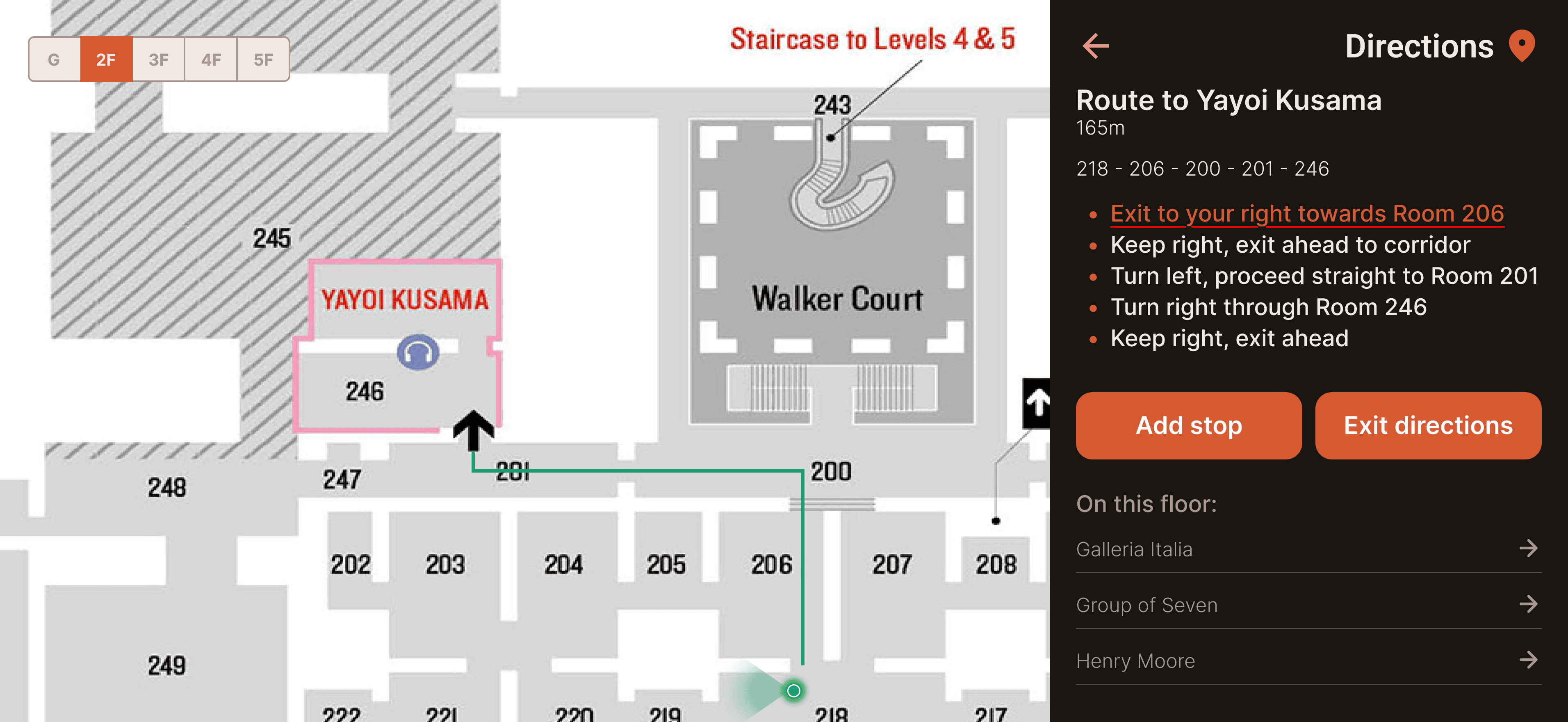
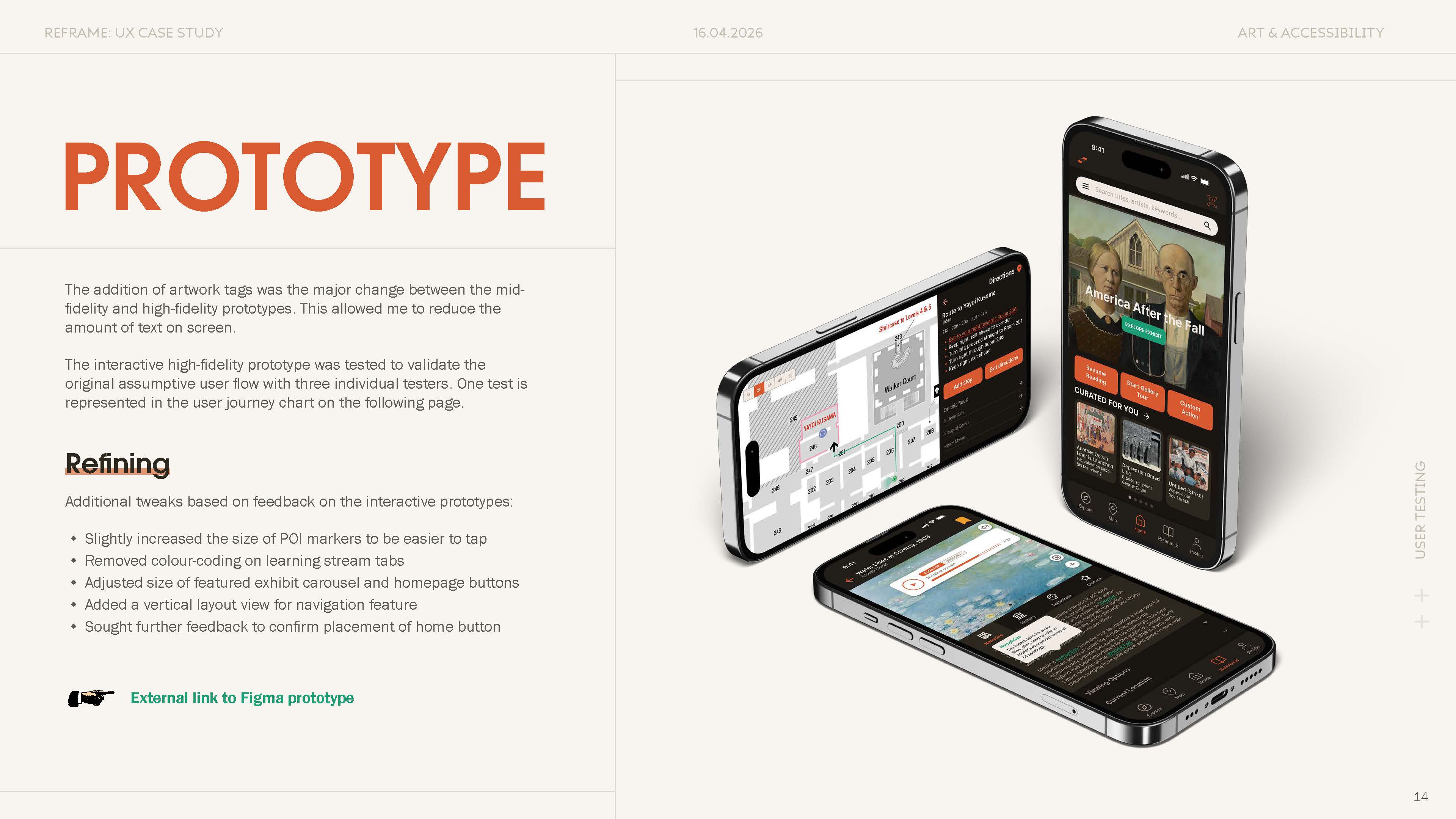
The app would also be available on mobile: first, as a gallery companion, with geofenced recommendations as well as navigational and route-planning features for travelers looking to make the most of their time, and second, as a way to learn and explore even from home.
Creative Direction, Design Direction, Content, UX/UI Design, User Research, User Testing